Sunday, May 15, 2022

My 10 Most Memorable Sports Event Experiences

 I have been very fortunate to have a long and fulfilling career in sports video production in the largest market in America – the New York market.  As such, we’ve hosted a great number of major events in the area before and during my career, giving me opportunities I would never have had if I lived in, say, Tulsa, Oklahoma.  I have also traveled to a few events outside of the area as a fan.  What follows are the top 10 memorable events I have attended either as a fan or as a worker:

10.  1990 AFC Wild Card Game, Miami vs. Kansas City – I had been a Miami Dolphins fan my whole life, and began going to see games in the northeast and Miami with a college buddy (and lifelong friend) in the late 1980s.  The team was not very good, aside from Dan Marino, Mark Clayton and Mark Duper; they could not run the ball nor play defense.  In 1990, Don Shula finally began putting together a good team, and I followed them all year long, attending the NFL Draft for the first time as Miami drafted the left side of their offensive line (Richmond Webb and Keith Sims) and traded for cornerback Tim McKyer.  Two weeks later I was in South Florida to shoot minicamp practices with my friend Dave Hack, who was the Dolphins’ Director of Video, because his assistant had to be out of town to attend a family wedding.  To say this experience, shooting practices for a pro team, was a game-changer for me is an understatement; it was then that I realized I had to have a career in sports, no matter what.  That became my goal.  During the 1990 season, I attended a pre-season game in Philadelphia and the season opener in New England as well as games in Buffalo, twice in New Jersey (Jets and Giants), and Washington, making friends with some of the players, taking photos from all over various stadiums, including from the sideline.  I wasn’t wealthy, but knowing Dave meant media passes rather than buying tickets to attend games.  Finally, the Dolphins finished the season 12-4 and made the playoffs, hosting the Kansas City Chiefs at Joe Robbie Stadium.  Because my Dad worked for American Airlines, I flew down for the game and got to cheer the Fins on to a tremendous comeback victory with Dan Marino driving the team for two touchdowns and a victory after entering the 4th quarter with a 16-3 deficit.  It was so great to finally see the team in a playoff game – and to win – in their home stadium.  That season set me on a course to work in sports, and I’ve succeeded beyond my wildest dreams.  I was in Buffalo the following weekend to see Miami fall 44-34 during a blizzard so strong that no defender could maintain footing, which was why the score was so high, but that didn’t matter after the Chiefs game.  I knew what I wanted to with my life, and I went out and did it.

9.  Game 4, 2002 NBA Finals, New Jersey vs. Los Angeles Lakers – I’m not much of an NBA fan, but I did get to work on the videoboard crew at the 
Meadowlands Arena for the 2002 NBA Finals, and what made Game 4 most memorable was seeing the Lakers hoist the NBA Championship Trophy (ugly, as it may be – it looks like a ball teetering on the rim of a garbage can) after completing a 4-game sweep of the Nets.  It’s not often you get to see team win it all, but I did on that night.  I remember Shaquille O’Neal absolutely dominating the Nets for the entire series, averaging over 36 points and 12 rebounds per game because the Nets simply had no answer to Shaq.  I still have one of the façade banners from the arena somewhere in my garage.  The following season the Nets made it back to the Finals and fared better, but lost to San Antonio in six games with the decisive game in Texas.

8.  2021 Army Navy Game – When I was laid-off, “RIF’d,” let -go, fired, whatever you want to call it, in 2010 from my job at the Meadowlands Sports Complex because Giants Stadium had closed and the arena’s last sports tenant, the New Jersey Nets, announced they were moving to Newark’s Prudential Center for two seasons before moving to Brooklyn, I began my freelance career in earnest.  One of the first freelance gigs I scored was working as a cameraman for Army football games.  I was the end zone camera operator for a few years, then their replay operator for a few years before settling in as their wireless sideline cameraman, which may be the best regular job I have ever had because it was so much fun.  Unfortunately, my client lost the Army gig after the 2019 season, but I had a tremendous decade-long run at West Point.  Thus, in early 2021, I asked my contacts at MetLife Stadium if I could direct the videoboard show at the Army Navy 
game, to be held in December.  Given my history of directing events at the stadium and my history with Army football, I was granted my request.  I worked the 2002 game at Giants Stadium, and while that was a great experience, I did not have the knowledge and respect for the military academies that I’d gained through working Army football in the 2010s, so the 2021 game meant far more to me than the 2002 game.  I remember giving a pep talk before the production meeting with the crew, something I had never done before, to emphasize the importance of the game, how some of the men and women who would be on that field either for the academies pre-game march-on or in the game itself would leave after graduation to serve our country and come home in a casket, and that the people they would focus their camera lenses on were not mere college kids, but soldiers and sailors.  I wanted them to see the faces in their lenses and realize what this game was about, and many told me that was the best pre-game speech they’d ever heard.  But we have a great crew at the stadium anyway, so I knew they’d deliver and they did, in a nearly perfectly executed show, from pre-game to post-game.  It was one of the most perfect shows I’ve ever been associated with, and the Army Navy show is a really long show, with crew in position for 3 hours before the game even starts.  I don’t know if or when the game will return to New Jersey, but I am hoping to get on the crew for this year’s game in Philadelphia.

7.  1994 World Cup Games – The World Cup is obviously one of the biggest sports events in the world, so when the United States was named host to the 1994 World Cup, I had hoped to score tickets to a game…. To no avail, at least not through the FIFA lottery system.  Giants Stadium, being the only soccer-sized stadium in the New York market, hosted numerous games, so I decided I’d try to scalp tickets at the venue, which I had done successfully in the past, never paying more than face value for numerous concerts that I’d attended.  Problem was, they wouldn’t even let drivers into the parking lot without tickets.  So I parked in a warehouse parking lot in Moonachie and walked a mile to the stadium where my beloved Italian squad (my mother’s Sicilian) took on Norway.  I scored a $50 ticket for just $30 because there 
were no fans in the parking lot looking for tickets and scalpers took a beating.  It was a great time, with the Italian crowd singing and cheering the Azzurri on to a 1-0 victory.  The German team advanced to the quarterfinals in what was expected to be an easy game against Bulgaria.  I was dating a woman from Ireland at the time and when I told her I had gotten myself into the Italian game, she begged me to take her to the quarterfinal; she being a soccer fanatic as a European.  My father’s German heritage meant that I rooted for Germany when they weren’t playing Italy, so I didn’t need convincing to execute my park-and-walk scheme one more time.  Like the Italian game, the parking lot was one giant party, with a mostly German crowd downing pints and eating German food.  We easily scored tickets just below face value and as soon as we got into the stadium, my date made her way to a pay phone to call her family in Ireland screaming with joy that she was attending a World Cup game.  That call must have cost a fortune, back then.  And that was the first time I began to realize just how much soccer meant to Europeans.  That game made her summer, though I went home quite disappointed with Germany falling 2-1 loss to underdog Bulgaria after opening the game’s scoring.

6.  2000 NFC Championship Game, Giants vs. Minnesota – the 2000 Giants were not expected to be a good team, but after a 3-2 start, they went on a tear, winning 9 of their next 11 games en route to a 12-4 record and the NFC East Division title.  Still, the media mocked them, calling them the worst division champ in the NFL.  After winning the divisional round, once again, they were mocked as the worst team to make it to a conference championship game.  That game was held at Giants Stadium, where I sat in the producer’s chair and served as music coordinator/DJ for Giants home games.  It was a really fun job, playing tunes, getting the fans into the game, coordinating TV timeout activities, and cueing legendary PA Announcer Bob Sheppard, who was one of the finest gentlemen with whom I have ever worked.  The Giants were hosting the Minnesota Vikings and were a home underdog because the Vikings had one of the most high-powered offenses in the NFL with Duante Culpepper, Randy Moss, and Chris Carter lighting up 
scoreboards all season long.  But Giants quarterback Kerry Collins played the best game of his career and the Giants defense manhandled the vaunted Viking offense.  The score was 35-0 Giants at halftime, which turned the second half into a party every time I got to play music during a TV timeout.  I remember playing “We’re Having a Party” by local favorite Southside Johnny and the Asbury Jukes at the two-minute warning and having 78,000 fans singing along.  But the best experience that day, for me, was in the postgame.  The Giants had won the game 41-0 and Bob Sheppard left at that two-minute warning to beat traffic out of the parking lot.  After the game, an NFL official brough up a page of copy for the PA Announcer to read, and since we no longer had a PA Announcer, I became the PA Announcer.  Telling fans that they could pick-up championship merchandise for, “your 2000 NFC Champion New York Giants” elicited a massive cheer; what a rush!  The fans hung on my every word when I told them to turn their attention to the stage where “NFL on Fox host Terry Bradshaw will now present the George Halas Trophy to your 2000 NFC Champion New York Giants.”  That announcement brought the house down the way Paul McCartney does when he ends Live and Let Die with a pyrotechnic fusillade.  It was so damned awesome.  I’ve never experienced anything like that before or since.

5.  The 1996 Atlanta Summer Olympic Games – Long before meeting my wife, Susan, she and her law school roommates bought tickets to attend the Atlanta games, trying to score tickets to premiere events but ultimately receiving tickets for badminton, baseball, volleyball and team handball.  By 1996, Susan and I were engaged and her friends had lost interest, so the two of us went and had a ball.  Fortunately, we got to visit Centennial Park (so named because this was the 100th anniversary of the first modern Olympics) before it was bombed and closed.  Going to the park was a fun experience in and of itself, meeting people from all around the world and trading pins.  Oh, and scalping tickets.  I managed to deal our extra tickets while also dealing some of the tickets for events we were going to attend, wheeling and dealing and working my way up to those coveted medal-round gymnastics tickets;

yup, I scored!  We did enjoy team handball and sat with the girlfriends of two of the Team USA players, who were super nice and explained the game to us to an understandable level.  Fortunately, we had left the park a few hours before the bombing and witnessed neither the carnage nor the panic that ensued when the park was evacuated.  I had always wanted to work an Olympics and still have not done so, but in truth, attending was better because I got experience multiple events in multiple venues while hanging out and partying instead of working in one venue for two weeks.

4.  2019 PGA Championship – I serve as a freelance video news journalist for a company based in London, and they send me to championship-level events and press conferences.  They sent me to my first golf tournament, the 2016 PGA Championship in nearby Springfield, NJ at the Baltusrol Golf Club.  It was a great time, covering the tournament for the entire week, but I was new to covering golf and spent the week learning as I went.  They next sent me to cover the 2018 U.S. Open at Shinnicock Hills Golf Club in the Hamptons, which was equally memorable to my 2016 PGA Championship experience.  But when I was assigned to the 2019 Championship at Bethpage Black, I was now a multiple-major veteran.  But what really made that experience better than my previous major tourney experiences was that I received a photgrapher’s lanyard and was permitted to work “inside the ropes” to cover the tournament.  Though I couldn’t shoot video on competition days because television had exclusive video rights on the course, I could take pictures.  Further, a vendor I know at Sony was on-site loaning camera gear and gave me a camera that shoots great photos and video.  As a result, I did my usual work, getting hours of footage on the three practice 
days for my client as well as post-round interviews with dozens of golfers through the competition, I also managed to shoot some 1,600 photos on the course over the 4 days that I had the camera.  What’s more, Brooks Koepka, one of my favorite golfers, won the Championship, his fourth major in two years (he won the Open a year prior at Shinnicock) in dominating fashion and some of the other golfers gave great quotes about him.  It was a really great week that left me looking forward to the 2020 U.S. Open at Winged Foot and the 2022 PGA Championship at Trump National.  Unfortunately for me, the pandemic meant no media at Winged Foot and the PGA’s decision to go woke moved the PGA Championship away from Trump National to somewhere in the Midwest.  Missing those two majors makes me appreciate the week I spent at Bethpage even more.

3.  Super Bowl XLVIII – Yes, the game itself was terrible, with Seattle destroying Denver by a score of…  well, I don’t even remember.  I remember the Broncos were down 3 touchdowns at halftime but thinking that with Peyton Manning, the Broncos could still come back; then Percy Harvin took the second half kickoff and ran it back for an 87 yard touchdown.  How do I remember that detail of the game?  I was a cameraman for the MetLife Stadium videoboard show; the 50-yard line game camera operator, in fact, and that kick return was the hardest play to cover, panning to my right to follow the kick, the following Harvin from the east end zone to the west 
end zone, a good 120 degree pan.  I had always wanted to attend a Super Bowl, going back to when I was a kid watching those championship Miami Dolphins teams win back-to-back, but never made it.  Tickets were too expensive.  But working the game was incredible.  We were there the Thursday before the Super Bowl to build and test cameras, then Friday for rehearsals, including two fly-overs and three halftime rehearsals from the foot of the stage – we were told that anyone who had a cell phone out would be fired immediately because they didn’t want any footage out before the Bruno Mars/Red Hot Chili Peppers performance on Sunday.  On Super Bowl Sunday, our call time was 9am, and after firing up cameras again and a long production meeting, we had 5 hours to walk around and take everything in, which we all did.  To date, Super Bowl XLVIII remains the only time I ever ran camera at an NFL game.

2.  1995 Stanley Cup Finals, Game 4, New Jersey vs. Detroit – I was working for the New Jersey Devils at the time as a freelance video editor, creating content for the video board show all season long.  The Devils had made it to the Stanley Cup Finals one season after losing the 1994 Eastern Conference Finals to the New York Rangers in heartbreaking fashion in overtime in Game 7 (and I was there, at the game, crushed because I wouldn’t be working the Stanley Cup Finals).  In 1995, the Devils swept the Detroit Red Wings, four games to none, winning the clinching game four by a score of 5-2, so the
game’s outcome was never in doubt after the second period and the third period was one long, loud party.  The Devils became the state’s first major sports champion and while the Devils went back and won two more championships in 2000 and 2003, nothing beats the first time.  After the game the team hosted a party through the overnight and we all got to hoist the Stanley Cup.  I met my wife at the Stanley Cup parade a few days later.  It was my first time experiencing a championship game, and it wouldn’t be the last.

1.  2022 Kentucky Derby – Susan and I were married on Derby Day in 1997; Silver Charm won the race and is still alive today, retired at Old Friends Equine Facility in Kentucky.  Thus, for our 25th Anniversary, I decided to take
Susan to the 2022 Kentucky Derby earlier this month.  It was just a phenomenal experience.  We attended the Kentucky Oaks the day prior, so we spent two days at America’s most iconic track, chatting with people in our trackside courtyard section on the rail and at the Galt House hotel’s Conservatory bar.  And what a Derby to attend, with longshot Rich Strike winning at 80-1 odds in front of a crowd of 147,294.  The food offerings were delicious and the bourbon was flowing as all food and beverages were included in the price of the admission.  It was a phenomenal time we hope to repeat in 2024 at the 150th running of the Derby.  Hope to see you there!

Yes, I have been very fortunate in my career, which is why I really enjoy sharing my experiences with sport management students at Rutgers University, where I teach part time.  I genuinely hope that my students get where they want to go in their sports careers and exceed my experiences, and some are well on their way.  It took me decades to get to my first Super Bowl and golf grand slam events, but I’ve had students who have worked their first Super Bowl, PGA Championship and Hall of Fame induction ceremonies before they’ve graduated!  They are getting tremendous experience and building a resume before earning their degree, and that’s how college should prepare students for their futures.  But I’m not done yet.  I still hope to do some more championship-level events, including the World Series, which is the one event that has eluded me so far.

Monday, May 2, 2022

Routine Sadness Does NOT Require a Therapist

A few weeks ago, mid to late-April, it had been unseasonably cold, cloudy, and windy for a few days.  This is the time of year in New Jersey when everyone looks forward to spring and warm weather, but that weather seemed to disappear for days.

On the way to work one of those days, I had been listening to the "Seriously Sinatra" channel on my SiriusXM radio on the way to work when Sinatra's rendition of A Very Good Year came on the radio.  I immediately flashed back about twenty years ago when I was visiting my 80-something year-old grandmother who had been overcome by dementia and was, as we discovered, months from the end of her life.  During that visit, that same Sinatra song was playing on the radio in her kitchen, which was tuned to a standards station. When the song changed to the melancholy tone prior the final verse and Sinatra sang about the "autumn of the years," the aging of the song's protagonist reflecting on his life, my grandmother asked, "When are you going to settle down and get married?"  I couldn't tell her that I had married years ago and that she had met my wife and her great-grandchildren many times, that would've confused the hell out of her so there was no point in going there.

From that moment on, I cannot hear A Very Good Year without thinking of that moment with my grandmother and feeling melancholy.  And that's fine.  Occasional sadness is natural and healthy and makes you experience and appreciate happy times more intensely.

Thus, when I read the graphic to the left which had been posted by a teacher's account on LinkedIn, I winced.  How did we get to the point where kids, teens, and college students are led to believe that one needs "a counselor or therapist when feeling sad?"  Don't get me wrong, if someone has bouts of depression, they should absolutely be referred to counseling, but routine sadness?  There is absolutely no need for therapy or counseling for sadness and we should not overwhelm therapist's offices with visits from people whose presence there may be preventing people who really need therapy from getting it in a timely manner.

If you've spent any time recently visiting numerous campuses on college visits with high school students, you've probably noticed an abundance of signs posted on campus walls sending a similar message - that students need help from counselors.  It's as if they're trying to convince students that they're all depressed and suicidal.

This was certainly not the case when I was a college student decades ago.  So it came as no surprise to me that suicide rates among those under the age of 25 have spiked recently.  In fact, according to a 2016 report, the Centers for Disease Control, suicide rates are up more than 30% in more than half of America's states since 1999 and in 54% of suicides, the victim was not known to have had mental health problems.  Those rates have only continued to rise due to the isolation of the pandemic.  One must wonder, is society conditioning acceptance of suicide as routine and convincing young Americans that natural, occasional sadness is a condition that must be treated?

Imagine going through life thinking that every time you experience routine sadness you are in need of treatment.  Clearly, with suicide rates skyrocketing, it's time for America to take a look at the messaging around sadness and reconsider what is labelled as a situation in need of treatment and what is a situation that is routine and normal and passes sometimes in minutes, sometimes in hours.  The health of young America is truly at stake.

Sunday, May 1, 2022

The Mess In Ukraine

For decades, Democrats and the left along with the sports world have legitimized the Russian government and downplayed Russian aggression.

In 2008, after nearly two decades of strife and ethnic cleansing, Russia essentially took over South Ossettia, a small territory that had been part of the Republic of Georgia.  This barely made the news.

In 2012, President Barack Obama told outgoing Russian president Medvedev to pass a message to incoming president Putin that he (Obama) would "have more flexibility" in helping Russia after his re-election campaign.  Less than two years later, Putin annexed Crimea, a small peninsula in Southern Ukraine.  The world responded with useless sanctions.

From 2017 to 2021, Russia stayed within their borders.  

Within months of President Joe Biden's 2021 inauguration, however, Putin began amassing troops at the Ukrainian border.  It became obvious to anyone with a functioning brain that trouble was brewing.  

Then the 2022 Winter Olympic games began, with Putin in attendance at the opening ceremonies in China despite Russia officially being banned from Olympic competition.

Because the Olympic games take 16 days to complete, it became obvious to anyone, again, with a functioning brain that Putin would not invade Ukraine until after the Olympics.  Instead of using those 16 days to negotiate with Putin and find a way to peace, Biden spent those 16 days saying that Russia would attack "any day now," almost goading Putin.

During the last week of the Olympic games, Biden sent his vice president, Kamala Harris, to eastern Europe, where she held a press conference and praised Ukrainian president Volodymyr Zelenskyy for allegedly wishing to "join NATO."

For those, again, with a functioning brain, this was a statement akin to "poking the bear."  Clearly Putin did not want Ukraine in NATO for the same reason president John Kennedy led the United States through the Cuban Missile Crisis - Putin did not want missiles at his border.  Like he did with South Ossetia and Crimea, Putin also wanted territory in Eastern Ukraine where there were majority Russian populations.  

One must keep in mind in all of these situations that Soviet Russia resettled many areas across their border with Russians during the Cold War and beyond, setting up the situation we are in today.

Less than a week after the Olympic Games ended, Putin's Russian Army invaded Ukraine.

Now that we see what happened, where do we go from here?  That's the big question.

First, let's consider that despite more useless sanctions against Russia, European nations are still buying natural gas and petroleum from Russia.  And the Russian Ruble, which Biden mocked as "rubble" when he imposed sanctions, is actually as strong as it was pre-invasion.  Finally, the Biden Administration is wasting ridiculous amounts of U.S. taxpayer money to fund this war.  Meanwhile, the U.S. economy is suffering greatly, buried in massive inflation and plummeting GDP.

Further, the American population does not want war, though to what degree is unknown.  We known that the pink hat-wearing "Code Pink" organization that protested President Bush disappeared when Obama became president and didn't seem to mind Obama expanding wars.  They also seemed to be anti-Trump even though Trump is the only president in, perhaps, my lifetime that didn't get the Unites States into any new military conflicts. And, of course, they seemed quiet when some mentioned enforcing a no-fly zone over Ukraine, which would've meant shooting-down Russian military jets, which the rest of the American public did not seem to desire.

Of course, even during the Cold War, America never entered into direct military action against Russian troops despite the Korean War, the Cuban Missile Crisis, Bay of Pigs disaster and Vietnam War.  Thus, enforcing a no-fly zone would put the American military in an unprecedented position.

So what does America do?

I'll give you my opinion on the best option, which will likely be an unpopular option:  Team Biden needs to contact Putin immediately and tell him that he can have two eastern territories in Ukraine and that Ukraine will not join NATO.  In return, Putin must promise that he will immediately cease-fire in Ukraine and refrain from any future expansions of the Russian border.

I know I will be accused of giving into a madman, but clearly Biden allowed this to happen through his inaction and, since Europe is still funding Russia by their reliance on Russian energy, there really is no other option.  By ending the war now, lives will be saved, which is the most important thing to consider.  Further,  American taxpayer dollars will be saved, and we might be able to slow the rate of inflation and stave-off a recession.  Ukrainian refugees could return home immediately, and a fraction of the money Biden was going to spend on war could be used for humanitarian aid to help rebuild Ukraine, which would be far more useful than spending the money to further destroy Ukraine.

If there's a better option, I'd love to hear it, but after giving this much thought, I really believe this is the best option. 


Saturday, April 30, 2022

Rock's Most Unheralded and Underrated Guitarist

Rush was a great and unique band.  The Canadian trio featured and all-time great drummer in Neil Peart, a phenomenal bass player in Geddy Lee, and a superb guitar player in Alex Lifeson.  What made them unique was that Lee and Lifeson would write the music while Peart wrote the lyrics, something drummers did not typically do.  A band’s singer usually writes the lyrics because he’s singing them, and he has to sing them with conviction; he has to “buy-in” and commit to the lyrics, which is much easier to do when a singer writes them.

But they were unique in another way.  Peart is one of the most heralded drummers in rock history, deservedly so.  And Lee has more skill as a bass player than most.  But the key to the band is Lifeson, as I will explain in a moment.

Having gone through high school in the early 1980s, when Rush had reached peak popularity, my high school years coincided with their best LPs:

  •  1980 – Permanent Waves was released while I was in 8th grade and was played a lot my freshman year on the high school grounds.
  •  1981 – Moving Pictures, released midway through freshman year
  •  1982 – Signals, my junior year
  •  1984 – Grace Under Pressure, my graduation year

Alex Lifeson and Neil Peart, 4/1/86
The second concert I ever attended was Rush at Madison Square Garden on the Signals tour, December 3, 1982.  I saw them again at the Meadowlands Arena on September 29, 1984, in the Grade Under Pressure tour and once more for the Power Windows tour on April 1, 1986.  I thoroughly enjoyed their music and seeing them live.

Of course, any time I saw them, my eyes were fixed on Peart absolutely rocking the drum set.  But over time I’ve come to appreciate Alex Lifeson because his versatility makes him better than most rock guitar players.

Consider, most guitar players have their signature sound.  You know Eddie Van Halen when you hear him.  Same with U2’s The Edge.  And Stevie Ray Vaughan has his own sound that makes his music instantly identifiable.  I can go on and on, naming almost every great guitar player that’s ever been recorded and they have their own sound, save for a handful of versatile and unique players like Eric Clapton and Steve Howe.  Among that handful has to be Alex Lifeson.

On Rush’s self-titled debut album, Lifeson, just 20 years-old, sounded like he was imitating Led Zeppelin’s Jimmy Page, using a similar guitar sound with heavy distortion.  Even on their second LP, Fly By Night, the guitar intro to Beneath, Between & Behind sounds like if could be a Led Zeppelin intro.  But there were hints of evolution on the title track, played with sparing distortion.  His sound evolved through the 70s, playing acoustically (The Trees, Closer to the Heart) and on electric, with effects and without, and playing fast and artistically (La Villa Strangiato, Xanadu).

By 1980’s Permanent Waves LP, Lifeson sounded nothing like he did on Rush’s debut just seven years prior.  A year later, on Moving Pictures, Lifeson was at his rock peak, playing skillfully when appropriate and rocking hard other times.

Then Rush began changing their sound, and as he did throughout the 70s, Lifeson’s sound changed with the band.  In the late 1980s and into the 90s, Rush went for a more keyboard-driven sound and Lifeson changed his guitar sound, but also his style.  The power riffing rock leads evolved into new wave textures and rhythms.

And that’s the greatness of Lifeson; he’s a shape-shifter, a guy who can really play any style and always wrote and played to the style of music the band was playing.  And while fans consistently raved about the virtuosity of Peart’s drummer and talent of Lee playing outstanding bass runs with his hands while often accompanying himself on synthesizer foot pedals, Lifeson, I believe, has been the key to the band’s sound.  Whether rocking a hard lead or applying texture to Geddy’s keyboard leads with appropriate guitar rhythms, Alex Lifeson always made Rush’s music better by playing to the song rather than trying to force a signature sound into a song.  That make Alex Lifeson one of the best guitar players in the industry because he can do so much and play so many styles.  It’s just a shame more music fans don’t recognize his talents.

Friday, April 22, 2022

The Idiocy of the Rock and Roll Hall of Fame

In 1978, singer/songwriter Kenny Loggins scored a hit with a "Whenever I Call You Friend," a song he co-wrote with Melissa Manchester and sang as a duet with Fleetwood Mac's Stevie Nicks.  The song peaked at number 5 on the Billboard pop charts.  The song marked Nicks' first success on the charts outside of Fleetwood Mac, as well as Loggins first solo success after splitting from Jim Messina, whith whom he had scored a top 10 hit ("Your Mama Don't Dance") as well as two top 20 hits ("My Music" and "Thinking of You") prior to going solo.

In fact, it was as a solo artist that Loggins had his greatest success, scoring two Grammy Awards in his 12 nominations.  Loggins also earned a Golden Globe and has been nominated for Tony and Academy Awards.  As a solo artist, Loggins penned and performed nine Top 20 singles, five Top 10 singles, and a number one with the theme from the film Footloose.  Loggins also scored big with film soundtrack songs "Danger Zone" from Top Gun, "I'm Alright" from Caddyshack, and "Meet Me Half Way" from Over the Top.

Loggins also co-wrote one of the biggest-selling Doobie Brothers songs with Michael McDonald - "What a Fool Believes."

From 1978 to 1988, few artists dominated radio the way Loggins did.  That's an undisputable fact.

The one honor Loggins has not received is induction into the Rock and Roll Hall of Fame.  In fact, Loggins has never even been nominated.

After success with "Whenever I Call You Friend," Stevie Nicks, on the other hand, had two more Top 50 singles with Fleetwood Mac - "Sara," which peaked at 37 on the pop chart, and "Gypsy," which peaked at 46.

Nicks also went solo, scoring her first two 'solo' hits by singing duets - "Stop Dragging My Heart Around" with Tom Petty and the Heartbreakers and "Leather and Lace" with Don Henley, both of which cracked the Top 10.

Nicks finally broke through with true solo success in 1982 with "Edge of Seventeen," which peaked at number 11 on the pop charts, and "Stand Back," her first true solo Top 10, peaking at number 5.

She scored four more Top 20 singles in her solo career, one of which peaked at 4 ("Talk To Me," which I have no recollection of ever hearing, and I was a college radio DJ in the 80s and a sports DJ in the 90s with the NJ Devils, NY Giants and NY Jets, so I remember 80s music extremely well).

Nicks had 8 Grammy nominations as a solo artist, without ever winning.

Clearly, Kenny Loggins had far more success as a solo artist than Stevie Nicks; it's not even debatable.  Loggins was a far greater songwriter than Nicks, who was the third best songwriter in Fleetwood Mac, behind hitmaking keyboardist Christine McVie and guitarist Lindsey Buckingham.

But Stevie Nicks is in the Rock and Roll Hall of Fame.  Twice.  Once, justifiably, as a member of Fleetwood Mac, and once as a solo artist.  How did Nicks make it in as a solo artist?  The Hall admits they wanted more women in the Hall; you know, more "Diversity, Equity and Inclusion."

The question thus becomes, is it fair to put someone like Nicks in the Hall because she's a woman while a far more successful artist like Loggins can't even get nominated?  I'll leave that for you to decide.

Monday, April 18, 2022

From Energy Independence to Desperate Dependence in One Election

The differences between President Trump and Joe Biden couldn't be more stark:

  • Trump had a strong pre-COVID economy.  Bidenomics has given us a Jimmy Carter economy.
  • Trump's foreign policy saw no new wars in the world.  Biden's got North Korea back to testing missiles and Russia back to exceeding their borders.
  • Trump opposed illegal immigration.  Biden's got open and porous borders.

But perhaps the most important distinction is in energy policy:  Trump believed in energy independence and made America a net-exporter of energy.  Biden is pushing electric cars that will make us completely dependent on foreign nations.

And the results of Biden's policies, predictably, will end in disaster.

According to Rivian CEO RJ Scaringe,
there is a severe shortage of materials needed to produce the 1,000 pound batteries that power electric vehicles.  Said Scaringe, "A
ll the world's cell production combined represents well under 10% of what we will need in 10 years, meaning, 90% to 95% of the supply chain does not exist."

Government's answer to this problem is to require gas-powered vehicles to average at least 40 mpg by 2026, a goal designed to decimate the auto industry because it's simply unattainable for most cars on the market today.  Put simply, cars are already made so cheaply to make them as light as possible so they can meet today's mileage standards and to raise those standards will mean even cheaper cars.

Those Mustangs made of a horrible and cheap plastic interior will be made even cheaper - I drive a Mustang and am surrounded in the cockpit by cheap, thin plastic.

Those Toyotas made with aluminum block engines that require you to re-tap the holes for the head bolts any time a head gasket change is needed will be made every cheaper - I've changed a Camry head gasket and re-tapping holes means removing the engine, a very costly fix for car owners.

Those cars that crumple in a fender bender because fenders are made of tin will fall apart because the metal on the exterior will become paper thin.

Simply put, more cars will be junked faster than every before because they simply won't last.  This creates far more waste than ever before while costing consumers more money for replacement.  And these fuel-powered cars will be absolutely necessary because, as Scaringe stated, there simply is not a supply chain for electric vehicles on an adequate scale.

So why did this administration dive-in head first into the EV market without a means to supply the forced demand?  It simply couldn't have been an accident.  They can't be that dumb, can they?

Tax Day Proves that Democrats Are Going After YOU, Not Millionaires

Today is tax day and some of you were shocked to see that you got screwed in more ways than one.

Yeah, yeah, yeah, we hear the Democrat lip service constantly - "The rich have to pay their fair share...  We're not going after anyone who makes less than $400,000 a year...  It's a millionaire's tax because we're only increasing taxes on millionaires!"

It's all a lie!  And you learned that this tax season.

First, let's talk about last year's "Child Tax Credit."  Sure, you got some money back from the government every month or so last year, and because President Trump gave you a real tax cut 4 years ago and a real stimulus check in 2020 that you got to cash, no stings attached, you thought you could trust government.  But it turns out that those Child Tax Credits were really just loans that had to be paid back.  

I had friends who were stunned when they learned that they owed $3,000 on their tax return this year because they accepted their "Credit."  Yeah, some of you smiled as you voted Democrat last November but Biden laughs at you today.  

The second way they got you was by declaring that if you sold a mere $600 worth of goods on Etsy and/or eBay last year, that's now considered taxable income.  

Buy record albums in the 70s and sell them last year on eBay?  You pay!  

Buy some football jerseys in the 80s and sell them last year on eBay?  You pay!

Buy baseball cards in the 90s and sell the last year on eBay?  You pay!

Your spouse, son or daughter made some crafts and sold them on Etsy?  They pay!

"We're only going after millionaires!"  What a load of crap! And they checked bank accounts to make sure they got their share of your Etsy and eBay money.

While middle class America lives paycheck to paycheck and suffers the strain of near double-digit inflation thanks to Bidenomics, Democrats would have you believe that corporations are making you poorer, but the Democrats the people who are lying to your face while increasing your taxes.  They are taking your money, not corporations. 

Greedy politicians.  That's your problem.  And on tax day, you should remember that.

Friday, April 15, 2022

Media has Become Theater of the Absurd in NJ with Regard to Legal Weed

This morning News 12 reported that "after some months of deliberations, New Jersey is ready to open their first legal marijuana shop."  

"Some months?"

Look, we all know the media does not like to criticize Democrats or hold them to any standard whatsoever, but Phil Murphy stated during his first gubernatorial campaign in 2017 that "the first thing" he would get done in office was legalizing weed.  That was FIVE years ago, not "some months" ago.

Don't get me wrong, I am not a weed-head and would rather it not be legalized at all (call me crazy, but legalizing a gateway drug when 2021 saw the most overdose deaths in NJ state history isn't smart, in my humble opinion), but Phil failed miserably to get pot legalized.  Technically, he never got it legalized at all; the people of this state did.  After 3 years of failure to get his Democrat-majority in the legislature to legalize weed despite the fact that the governor is the de facto head of his state's party, the weed coalition managed to get weed legalization on the ballot as a question, and the people approved it.

Phil then slowed the process down by appointing a committee, choosing his members by diversity, equity and inclusion, of course, and it took the committee a year and a half to get this done.  Maybe they were all stoned for the last 18 months and worked r-e-a-l   s-l-o-w-l-y.

Of course, come Monday, I expect Phil to take victory lap, bragging about getting this done.  And the adoring media will proudly report this as some great accomplishment for the governor, but again, the reality is that Phil was completely ineffective at legalizing weed and did little to get this done in any semblance of a timely manner.  Kinda like how it took thousands of deaths for Phil to reverse his incredibly moronic policy of forcing COVID patients into nursing homes.  But the media never took him to task for that, either.

Tuesday, April 12, 2022

Gun Control Does Not Work

Yesterday Joe Biden did what Joe Biden does best these days: he went on TV and yelled at the teleprompter, sometimes incoherently, about gun control and "ghost guns," as if guns made from parts or from 3D printers were responsible for the sharp uptick in urban homicide rates since the return of ill-advised (a polite way of saying "stupid") left-wing policies led by people like New York City's former mayor, Bill (Warren Wilhelm) de Blasio.

Personally, I wouldn't trust a handgun made from parts (particularly those made of 3D-printed parts) because if the firearm fails and backfires, the shooter would either be dead or permanently disfigured and in pain for life.

That said, I understand the desire and the challenge of building something by hand.  My father restores antique cars partly because he loves old cars but mostly because he loves the challenge.  

I suspect that's why most people build a pistol - to see if they can do it.  I don't think anyone's building a firearm with the thought of using it in a crime.  And the reality is, there simply aren't a whole lot of reports on the news of people committing violent crimes with "ghost guns" to justify a crackdown on them.

But this is what Democrats do and have been doing for decades:  they enact policies that are soft on crime, then when crime increases, they announce new gun laws.  They've been infringing on Constitutional firearms rights for decades and yet, there are still gangs roaming the streets committing violent crimes including homicide with all kinds of weapons, including firearms.  But Democrats never seem to want to address that problem.  Instead, they limit freedom on law-abiding citizens.

Then, of course, today there was a mass-shooting in Brooklyn that Democrats in New York and Washington will use to push for more limitations on legal firearms that will not stop a criminal or the criminally insane from acquiring an illegal weapon and using it.

And it's important that we address both of those groups - the criminal and the criminally insane.  They are the cause of most crime, violent crime, and use of firearms in a crime in America.

Why do sane people turn to crime?  Primarily because they're poor and/or addicted and in need, so kids join gangs and adults turn to crime to feed their habit.  And Democrats respond to crime by legalizing narcotics and releasing criminals.  Unsurprisingly, drug use has skyrocketed as has violent crime.  Go figure.

Why do criminally insane people turn to violent crime?  Because they can.  Decades ago the criminally insane were institutionalized; now they're household names of infamy after mass shootings that would never have happened had they been living in a psych ward.  The most egregious case occurred in southern Florida where a teen with serious mental disorders was passed from school to school because everyone knew he was dangerous and no one wanted to deal with it.  But predictably, every time the criminally insane shoot-up a school or a train or anywhere else, Democrats blame the firearm and use the homicidal attack as an excuse to curb the rights of the millions of gun owners who've never committed a crime.

So where do we go from here?  Back to 1992, in New York City.  That year there were 2,262 homicides in the city.  That's 6.2 murders a day.  And after decades of lax Democrats leadership, New Yorkers were fed up and elected a Republican mayor for the first time since Fiorello LaGuardia's three terms ended in 1945.  (Yes, John Lindsay was elected as a Republican in 1965, but was the man for whom the term "limousine liberal" was created and was re-elected on the Liberal Party ticket in 1969 before running for president in the Democrat primary a few years later).

That mayor who won in 1993 was Rudy Giuliani, who promptly cracked-down on crime and violence and cleaned-up New York City after decades of rot.  Giuliani's policies were so effective that they were followed by cities across the country and by the end of 2001, New York City experienced just 649 murders (excluding the 9/11 terror attacks).

Mike Bloomberg followed Giuliani as mayor and continued Giuliani's law-and-order policies and by 2013, New York City was averaging less than one murder per day, making New York City one of the world's safest large cities.

The path America must chart for a safe future is crystal clear - we must have law and order and criminals must pay for their crimes with prison time.  The criminally insane must be removed from society and institutionalized, as difficult as that may be for parents to accept.  

With regard to the enforcement of New York City's ridiculously low speed limits, Bill (Warren Wilhelm) de Blasio said, "If it saves just one life, it's worth it!"  If only Democrats felt this way about law and order and the criminally insane, we'd all have safer cities without having to have our Constitutional rights infringed upon.


Sunday, April 10, 2022

My Experience with Tachycardia and the COVID Vaccine

When the pandemic began in the United States, I had already been following the news from Italy, where the virus devastated the nation and was particularly lethal to the elderly and overweight population, especially those with one or more health issues.  Having been sent home to work remotely, I set up my laptop on my dining room table and realized I was surrounded by snacks.  I decided to walk a mile that Saturday afternoon, March 14, 2020.

Within a week, I was walking three miles a day.  

Within three weeks, I was running a mile and then walking two daily.

Admittedly, I was snacking more, but the daily exercise was paying dividends as I was running faster and farther every week.

By May, I had increased my running distances, but was running just three days a week while walking three miles on days I did not run.  I set a goal to run a 5k distance by summer and in early June ran my first 5k distance in 32 minutes flat.  A week later I purchased running shoes and cut my 5k time down to 28 minutes.

I had gotten myself into pretty good physical shape, probably my best physical condition in over twenty years, back when I was in my late-20s and regularly playing pick-up basketball, softball, and occasionally ice hockey.  I stopped playing sports around the age of 30, when I dislocated my shoulder periodically and started my family, which consumed a lot of time.  Still, throughout my thirties and forties, I was never a sedentary person, which may have helped me get into excellent cardio condition in 2020.

Thus, I was pretty comfortable with my odds of beating the pandemic.  I was, and remain, slightly overweight, but I am healthy and have none of the illnesses or conditions that make the odds of beating the virus really low.

When the vaccine emerged near the end of 2020, I decided to take a pass on it.  Again, I liked my chances of survival because of my physical condition and sound immune system.  Further, I had returned to work with some co-workers while most people at my place of employment chose to stay home. 

By summer of 2021, one of my employers (who will remain nameless) required the jab to continue working there.  It was a part-time gig, but I really enjoyed it and let’s just say the results of my work product were consistently near the top of the charts.  So I took the jabs. 

The first jab went smoothly, though I was tired the next day.  The second jab produced far more intense results.  I was exhausted and lethargic, yet my mind was working as if I’d consumed a pot of coffee, resulting a near all-nighter because I just couldn’t sleep with my mind overly active, so I read a book.  I didn’t check any of my vital signs and figured I’d be fine in a day or two.

The employer that required the jab then required the third jab, or “booster” by January 31, 2022.  I didn’t want it.  At all.  I didn’t want to go through another sleepless night.  I’d also concluded that the initial jab didn’t nearly work as promised; I believe Joe Biden said in early 2021 that if we got the vaccine, we’d be safe for life.  Getting another shot 4-5 months after getting the first one clearly showed the ineffectiveness of the shot.  I appealed to management and was denied the choice to control my own healthcare.

So I got the third shot.

This time I had similar side effects from the first shot, but I monitored my pulse on my Fitbit.  While laying lethargically on the couch all day, my heart was actually racing, peaking at 97 beats per minute despite complete inactivity.  It should be noted that my daytime resting heart rate is generally in the 60s and low 70s.  Clearly the shot affected my heart.  A scientist I spoke with subsequently (who was involved in the response to the pandemic) told me I probably had tachycardia from the shot, a pretty common but grossly underreported side effect.  Why was it underreported?  He said it was because most people didn’t know they had it because they weren’t monitoring their pulse.  In truth, I know I had it after the third jab and likely had it after the second and never, myself, reported it to the CDC, so I am part of the underreported cases.

I also visited my cardiologist who said that the increased heart rate was likely due to the shot.

Just to show what I believe the shot did to my cardio system, I am posting my Fitbit-measured overnight resting heart rate, keeping in mind that I had the third jab on January 29, 2022 and that a month later, my resting heart rate was in the high 60s.  By early April, that resting heart rate was back down into the high 50s.


Can I prove that the jab caused the 18% increase in my resting heart rate?  No.  But during the months of February, March and April, I had no illnesses or traumatic incidents, nothing that would cause tachycardia.

Here are three more screen grabs from by Fitbit results showing what my pulse was during exercise two weeks before the jab, just over two weeks after the jab, and 6-7 weeks after the jab.  Note the peak heart rate, which is roughly 20% higher a few weeks after the jab compared to before the jab and 7 weeks after.  Again, can I prove that the jab caused increased pulse?  No, but I also do not believe that this is coincidence.


      1 mile run, 1/12/22        1 mile run, 3/16/22         1 mile run, 4/10/22


So I ask you to make up your own minds.  I know from here on out, I will do what I feel is best for my health.  Your health should be your choice; isn’t that what we’re always told by the pro-abortion crowd?

Sunday, March 6, 2022

The Top 10 Albums of the 21st Century (so far)

During the pandemic shut-down, I was teaching my Rutgers University sport management classes remotely.  I took advantage of the remote learning opportunity to bring guests into the Zoom classroom – guests from all over the country who work and compete in sports, from former students working for sports franchises in Miami and Memphis to former Yankees third baseman Todd Frazier and former Yankees pitcher and current Army West point Athletics Director Mike Buddie.  The guests were all really gracious with their time and informative to the students by offering their perspective. 

One of the best guests was someone to whom I reached out to get the perspective of a professional touring musician who occasionally plays in sports arenas, because the concert industry is a big money maker for sports franchises who own and operate sports facilities.  That guest was Roger Joseph Manning, Jr., who was a phenomenal guest who gave tremendous insight into his career from playing clubs in critically acclaimed (but financially unsuccessful) bands to playing Madison Square Garden as Beck’s touring keyboardist.

At one point he had mentioned how homogenous pop radio sounded today.  I replied that I remembered how great radio was in the 1970s, when you would hear a country song, followed by a rock song, followed by a disco song.  Even the Theme from Star Wars actually cracked Top-40 radio, so you even heard classical music!  The variety was incredible, and Roger agreed, having grown up on 70s radio.

Thus, as a mid-50s adult male who does not make a living as a music writer, my Top 10 list of albums of the 21st Century does not include any Top 40 pop artists or quirky “critics’ choice” artists.  But it does include some really outstanding music that is just great to listen to for a variety of reasons.  So here is my Top 10, in no particular order

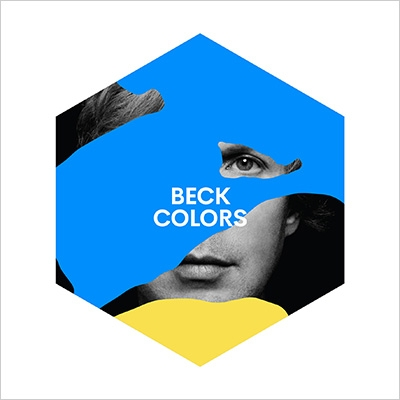
1.  “Colors” by Beck – I know Colors is Beck’s most pop-oriented album and it spawned a number of singles and music videos, but it’s not a typical pop album.  What it is, however, is freaking great.  It’s so upbeat, yet quirky in the way that Beck’s music is always quirky.  Unlike other Beck albums, the songs fit together perfectly as it sounds like it has a musical theme, so the music flows well from one song to the next, but the songs still sound different enough to make every song a great song.  I know there are music websites that rank it well, but not as well as Guero or Sea Change, but for me I have been playing Colors pretty regularly since its release five years ago and I never tire of any of it.  I listen start to finish.  There’s a lot going on in every song and it’s just a lot of fun, and the world can use more fun!  While it’s hard to choose a favorite song from the LP, Up All Night and I’m So Free are great songs that my kids enjoy as much as I do.  It’s one of my all-time favorite albums and it probably always will be.

2.  “New” by Paul McCartney – I wrote an extensive review of McCartney’s “New” when it was released in 2013 that I have reposted on my new blog here, so I will not go on at length other than to say that this is probably McCartney’s best and most diverse album since Band On the Run set the standard for his post-Beatles band Wings.  The songs are very modern, well-written, expertly produced and feature McCartney playing dozens of musical instruments layered together in a well-produced manner.  It’s another album I managed to wear-out without tiring of it.  While the singles New and Queenie-Eye are pure pop as only McCartney can write, my favorite tracks are the more avant-garde Looking At Her and Road, which close the album.

3.  “Costello Music” by The Fratellis – Scotland’s Fratellis released their debut LP, “Costello Music,” in 2006.  It featured 6 singles released in the UK and each single featured two “b-side” tracks that were almost every bit as good as the thirteen tracks on the LP, including my favorite non-LP track, 3 Skinny Girls.  In other words, The Fratellis had about 20 songs worth of great material for their debut album, which is really impressive when you consider that only one guy in the trio writes – then 27 year-old guitarist Jon Lawlor, aka Jon Fratelli.  I was fortunate enough to see them on their first four New York market appearances including an acoustic set at the Virgin Megastore, a few ballroom shows at Webster Hall and Roseland Ballroom, and a gig at Giants Stadium in support of The Police.  They were great no matter the size of the venue or the format of the show.  Unfortunately, they’ve incorporated the piano on subsequent albums and that dramatically changed their rock-punk sound.  But that debut album was an absolute knockout.

4.  “The Land of Pure Imagination” by Roger Joseph Manning, Jr. – I mentioned my Zoom session with Roger at the top of this piece and that experience really led me to explore his catalog.  He’s truly a musical genius on keyboards – a collector, he has over 100 keyboards – but can play any instrument well enough to record with competence.  He’s best known for his work from 1988 to 1992 in Jellyfish and as Beck’s touring keyboardist for decades, but in the interim, he’s released a number of solo and band recordings as well as some real oddball stuff (Moog Cookbook, basically he and a friend covering famous songs on 70s Moog Synthesizers.  The Cookbook albums were never intended to sell, and didn’t, but were probably a lot of goofy fun to record).  “The Land of Pure Imagination” is pure retro power pop.  It’s absolutely brilliant and it was basically recorded by Roger over time in his home studio.  His other solo album – “Catnip Dynamite” – is about as good as “The Land of Pure Imagination,” but I give the latter the nod on this list because the track Wish It Would Rain is about the best pure pop song ever recorded.  It’s so good that I got my then 20 year-old daughter into the song and she turned her friends on to it.  How many 50-something fathers can get their 20 year-old daughters to enjoy obscure power pop?  It takes a special song, and Wish It Would Rain is truly special.  Check out the whole LP!

5.  “Be As You Are” by Kenny Chesney – For the early 2000s, Kenny Chesney had hinted at going coastal, coastal country, that is.  In the 90s, he was a purely country artist but had discovered island life and began shifting his sound.  The shift was complete when he released 2005’s “Be As You Are.”  The album marked the first time an artist out-Buffetted Jimmy Buffett.  This collection of ballads with a little bit of party coastal country is a perfect album from start to finish – there’s not a weak song in the lot.  It’s just a fun album for sitting by the pool, having a cold one by the fire pit, or swinging in a hammock.  I should know as I’ve listened to this album while doing all of the above and more.  Key Lime Pie is a personal favorite - the song and the dessert - as are Magic and Soul of a Sailor.  The fact that those three songs are among the last five on the album give you an idea of how deep the album goes.

6.  “On An Island” by David Gilmour – Make no mistake, despite the title of this 2006 release, this collection of music is nothing like Kenny Chesney’s island music.  David Gilmour’s first solo LP in more than two decades starts with a few light, ethereal songs that are so relaxing and chill, but spacy, like classic Pink Floyd (the title track and The Blue).  He flexes his rock muscle a bit, too as the LP progresses.  His guitar playing – he was 60 years-old when he released this album and still at the top of his game – is outstanding, as always.  Gilmour makes my Top 5 all-time great guitarists and is so smooth on this LP.  Never a great lyricist, Gilmour teams with his wife, Polly Sampson, who’s writing style fits Gilmour’s music perfectly.  There aren’t too many great, young rock guitar players making great music like this anymore, so it is easy to see why this album by an aging British guitar god makes this list, which brings us to an even older British guitar god…

7.  “I Still Do” by Eric Clapton – I readily admit that I am biased toward this 2016 release because this was Clapton’s first release after the greatest professional gig of my career, robocam operator for Clapton’s 70th birthday celebration concerts at Madison Square Garden and that gig set me off on a Clapton jag through the release of this LP.  There are critics who’ve said that this album breaks no new ground and isn’t adventurous enough, but at 71, what new ground is Clapton supposed to break?  He helped bring blues to the UK mainstream, did psychedelic acid rock, southern rock, Midwest Tulsa rock, country, reggae, and pop.  He's done about everything there is to do while always staying true to his blues roots.  "I Still Do" is a fun album with some great original songs and some equally great and fun covers.  Music for enjoying, and this album is enjoyable to me.  There are a few excellent originals, including Spiral, which features some fine rhythm playing by Andy Fairweather Low, and some great covers.  The closing track, I’ll Be Seeing You, is a brilliant cover of a classic covered by Sinatra, Bing, Sarah Vaughan and Billie Holliday – four of the greatest voices ever recorded – and yet, Eric holds his own on his version.  Upon its release many thought the song a cryptic message that he was retiring, but less than two years later he released a Christmas album that was also really good and has released some subsequent singles.  Thankfully, Eric hasn’t gone anywhere.

8.  “Annie Up” by The Pistol Annies – Miranda Lambert is one of the most successful country artists of all time, so she never needed to have a side project, but when you hang out with Angeleena Presley and Ashley Monroe and wind up writing an album’s worth of material in no time flat, you suddenly have a side project.  And what a side project it is!  These ladies can do three-part harmony with the best of them, and they need no effects or auto tune – I saw them live and they sound as good live as they do in a recording studio.  Their music is what could be considered feminist or liberating for women, but it’s also witty to any listener.  They have a great sense of humor, tremendous songwriting chops and those aforementioned incredible vocals.  What’s not to like?  Particularly good are Hush Hush, Unhappily Married and I Feel a Sin Coming On.  Any of their three LPs could make this list, but I think “Annie Up” is the best album, start to finish.  As a side note, Ashley Monroe posted to social media just last week that she has likely beat an incredibly rare form of cancer that is considered incurable.  She’s been fighting it for a year, so her announcement was exciting news, for sure!

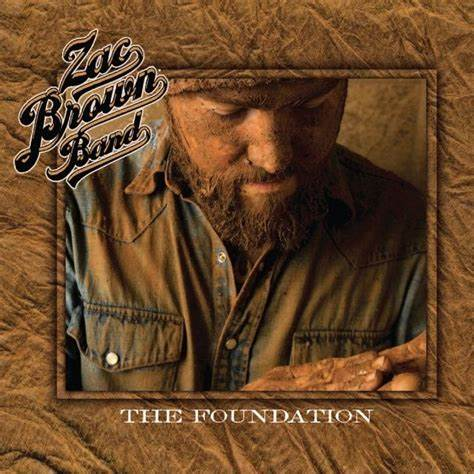
9.  “The Foundation” by Zac Brown Band – The 2008 debut album by Zac Brown Band spawned 5 top country singles and went five times Platinum, peaking on the Billboard album sales chart at 9th overall.  This is something country albums simply don’t regularly do, but Zac Brown Band is not your typical country band.  From this debut album, they’ve continued to crossover genres and take modern country in new directions.  This album marked a change in the direction of country music – one old-timers hate but I absolutely love.  And these guys are extremely talented musicians who are among the most entertaining live bands in America today.  Toes and Where the Boat Leaves From are great summer tracks while Highway 20 Ride expertly tackles the delicate topic of the father who only gets to see his son two weekends a month.

10.  “All The You Can’t Leave Behind” by U2 – While this is not the best album by U2 and there is some filler, this LP marked a huge comeback album for the band.  The classic 1991 album “Achtung Baby” had been a high point, selling 18 million worldwide (and went 8 times platinum in the US).  U2 only released two more albums in the 90s - the experimental EDM Zooropa (4x platinum) and Pop (1x platinum) and the band seemed to be fading into obscurity when they chose to return to their rock roots and recorded the album with their 1980s production team of Brian Eno and Daniel Lanois.  The return proved to be a wise move.  The album was a tour de force featuring four singles, two of which were Record of the Year in successive years.  It sold 12 million copies worldwide and went 4x platinum in the USA.  The best tracks are Beautiful Day and Elevation while Stuck In a Moment You Can’t Get Out Of is an outstanding tribute to INXS singe Michael Hutchence.

That's it, my 10 favorite albums from the 21st century so far.  What's sad is that most of these albums are from the first decade of the century.  Maybe there's just not a whole lot of great music being made any more.