Sunday, March 6, 2022

The Top 10 Albums of the 21st Century (so far)

During the pandemic shut-down, I was teaching my Rutgers University sport management classes remotely.  I took advantage of the remote learning opportunity to bring guests into the Zoom classroom – guests from all over the country who work and compete in sports, from former students working for sports franchises in Miami and Memphis to former Yankees third baseman Todd Frazier and former Yankees pitcher and current Army West point Athletics Director Mike Buddie.  The guests were all really gracious with their time and informative to the students by offering their perspective. 

One of the best guests was someone to whom I reached out to get the perspective of a professional touring musician who occasionally plays in sports arenas, because the concert industry is a big money maker for sports franchises who own and operate sports facilities.  That guest was Roger Joseph Manning, Jr., who was a phenomenal guest who gave tremendous insight into his career from playing clubs in critically acclaimed (but financially unsuccessful) bands to playing Madison Square Garden as Beck’s touring keyboardist.

At one point he had mentioned how homogenous pop radio sounded today.  I replied that I remembered how great radio was in the 1970s, when you would hear a country song, followed by a rock song, followed by a disco song.  Even the Theme from Star Wars actually cracked Top-40 radio, so you even heard classical music!  The variety was incredible, and Roger agreed, having grown up on 70s radio.

Thus, as a mid-50s adult male who does not make a living as a music writer, my Top 10 list of albums of the 21st Century does not include any Top 40 pop artists or quirky “critics’ choice” artists.  But it does include some really outstanding music that is just great to listen to for a variety of reasons.  So here is my Top 10, in no particular order

1.  “Colors” by Beck – I know Colors is Beck’s most pop-oriented album and it spawned a number of singles and music videos, but it’s not a typical pop album.  What it is, however, is freaking great.  It’s so upbeat, yet quirky in the way that Beck’s music is always quirky.  Unlike other Beck albums, the songs fit together perfectly as it sounds like it has a musical theme, so the music flows well from one song to the next, but the songs still sound different enough to make every song a great song.  I know there are music websites that rank it well, but not as well as Guero or Sea Change, but for me I have been playing Colors pretty regularly since its release five years ago and I never tire of any of it.  I listen start to finish.  There’s a lot going on in every song and it’s just a lot of fun, and the world can use more fun!  While it’s hard to choose a favorite song from the LP, Up All Night and I’m So Free are great songs that my kids enjoy as much as I do.  It’s one of my all-time favorite albums and it probably always will be.

2.  “New” by Paul McCartney – I wrote an extensive review of McCartney’s “New” when it was released in 2013 that I have reposted on my new blog here, so I will not go on at length other than to say that this is probably McCartney’s best and most diverse album since Band On the Run set the standard for his post-Beatles band Wings.  The songs are very modern, well-written, expertly produced and feature McCartney playing dozens of musical instruments layered together in a well-produced manner.  It’s another album I managed to wear-out without tiring of it.  While the singles New and Queenie-Eye are pure pop as only McCartney can write, my favorite tracks are the more avant-garde Looking At Her and Road, which close the album.

3.  “Costello Music” by The Fratellis – Scotland’s Fratellis released their debut LP, “Costello Music,” in 2006.  It featured 6 singles released in the UK and each single featured two “b-side” tracks that were almost every bit as good as the thirteen tracks on the LP, including my favorite non-LP track, 3 Skinny Girls.  In other words, The Fratellis had about 20 songs worth of great material for their debut album, which is really impressive when you consider that only one guy in the trio writes – then 27 year-old guitarist Jon Lawlor, aka Jon Fratelli.  I was fortunate enough to see them on their first four New York market appearances including an acoustic set at the Virgin Megastore, a few ballroom shows at Webster Hall and Roseland Ballroom, and a gig at Giants Stadium in support of The Police.  They were great no matter the size of the venue or the format of the show.  Unfortunately, they’ve incorporated the piano on subsequent albums and that dramatically changed their rock-punk sound.  But that debut album was an absolute knockout.

4.  “The Land of Pure Imagination” by Roger Joseph Manning, Jr. – I mentioned my Zoom session with Roger at the top of this piece and that experience really led me to explore his catalog.  He’s truly a musical genius on keyboards – a collector, he has over 100 keyboards – but can play any instrument well enough to record with competence.  He’s best known for his work from 1988 to 1992 in Jellyfish and as Beck’s touring keyboardist for decades, but in the interim, he’s released a number of solo and band recordings as well as some real oddball stuff (Moog Cookbook, basically he and a friend covering famous songs on 70s Moog Synthesizers.  The Cookbook albums were never intended to sell, and didn’t, but were probably a lot of goofy fun to record).  “The Land of Pure Imagination” is pure retro power pop.  It’s absolutely brilliant and it was basically recorded by Roger over time in his home studio.  His other solo album – “Catnip Dynamite” – is about as good as “The Land of Pure Imagination,” but I give the latter the nod on this list because the track Wish It Would Rain is about the best pure pop song ever recorded.  It’s so good that I got my then 20 year-old daughter into the song and she turned her friends on to it.  How many 50-something fathers can get their 20 year-old daughters to enjoy obscure power pop?  It takes a special song, and Wish It Would Rain is truly special.  Check out the whole LP!

5.  “Be As You Are” by Kenny Chesney – For the early 2000s, Kenny Chesney had hinted at going coastal, coastal country, that is.  In the 90s, he was a purely country artist but had discovered island life and began shifting his sound.  The shift was complete when he released 2005’s “Be As You Are.”  The album marked the first time an artist out-Buffetted Jimmy Buffett.  This collection of ballads with a little bit of party coastal country is a perfect album from start to finish – there’s not a weak song in the lot.  It’s just a fun album for sitting by the pool, having a cold one by the fire pit, or swinging in a hammock.  I should know as I’ve listened to this album while doing all of the above and more.  Key Lime Pie is a personal favorite - the song and the dessert - as are Magic and Soul of a Sailor.  The fact that those three songs are among the last five on the album give you an idea of how deep the album goes.

6.  “On An Island” by David Gilmour – Make no mistake, despite the title of this 2006 release, this collection of music is nothing like Kenny Chesney’s island music.  David Gilmour’s first solo LP in more than two decades starts with a few light, ethereal songs that are so relaxing and chill, but spacy, like classic Pink Floyd (the title track and The Blue).  He flexes his rock muscle a bit, too as the LP progresses.  His guitar playing – he was 60 years-old when he released this album and still at the top of his game – is outstanding, as always.  Gilmour makes my Top 5 all-time great guitarists and is so smooth on this LP.  Never a great lyricist, Gilmour teams with his wife, Polly Sampson, who’s writing style fits Gilmour’s music perfectly.  There aren’t too many great, young rock guitar players making great music like this anymore, so it is easy to see why this album by an aging British guitar god makes this list, which brings us to an even older British guitar god…

7.  “I Still Do” by Eric Clapton – I readily admit that I am biased toward this 2016 release because this was Clapton’s first release after the greatest professional gig of my career, robocam operator for Clapton’s 70th birthday celebration concerts at Madison Square Garden and that gig set me off on a Clapton jag through the release of this LP.  There are critics who’ve said that this album breaks no new ground and isn’t adventurous enough, but at 71, what new ground is Clapton supposed to break?  He helped bring blues to the UK mainstream, did psychedelic acid rock, southern rock, Midwest Tulsa rock, country, reggae, and pop.  He's done about everything there is to do while always staying true to his blues roots.  "I Still Do" is a fun album with some great original songs and some equally great and fun covers.  Music for enjoying, and this album is enjoyable to me.  There are a few excellent originals, including Spiral, which features some fine rhythm playing by Andy Fairweather Low, and some great covers.  The closing track, I’ll Be Seeing You, is a brilliant cover of a classic covered by Sinatra, Bing, Sarah Vaughan and Billie Holliday – four of the greatest voices ever recorded – and yet, Eric holds his own on his version.  Upon its release many thought the song a cryptic message that he was retiring, but less than two years later he released a Christmas album that was also really good and has released some subsequent singles.  Thankfully, Eric hasn’t gone anywhere.

8.  “Annie Up” by The Pistol Annies – Miranda Lambert is one of the most successful country artists of all time, so she never needed to have a side project, but when you hang out with Angeleena Presley and Ashley Monroe and wind up writing an album’s worth of material in no time flat, you suddenly have a side project.  And what a side project it is!  These ladies can do three-part harmony with the best of them, and they need no effects or auto tune – I saw them live and they sound as good live as they do in a recording studio.  Their music is what could be considered feminist or liberating for women, but it’s also witty to any listener.  They have a great sense of humor, tremendous songwriting chops and those aforementioned incredible vocals.  What’s not to like?  Particularly good are Hush Hush, Unhappily Married and I Feel a Sin Coming On.  Any of their three LPs could make this list, but I think “Annie Up” is the best album, start to finish.  As a side note, Ashley Monroe posted to social media just last week that she has likely beat an incredibly rare form of cancer that is considered incurable.  She’s been fighting it for a year, so her announcement was exciting news, for sure!

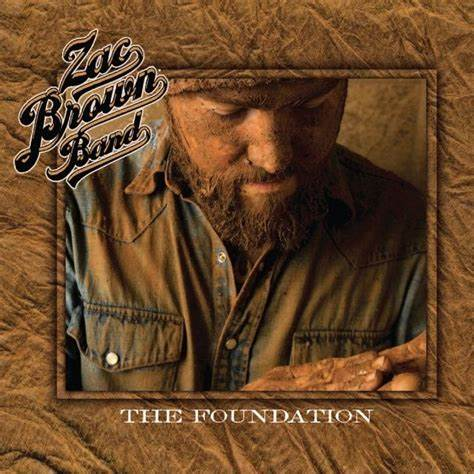
9.  “The Foundation” by Zac Brown Band – The 2008 debut album by Zac Brown Band spawned 5 top country singles and went five times Platinum, peaking on the Billboard album sales chart at 9th overall.  This is something country albums simply don’t regularly do, but Zac Brown Band is not your typical country band.  From this debut album, they’ve continued to crossover genres and take modern country in new directions.  This album marked a change in the direction of country music – one old-timers hate but I absolutely love.  And these guys are extremely talented musicians who are among the most entertaining live bands in America today.  Toes and Where the Boat Leaves From are great summer tracks while Highway 20 Ride expertly tackles the delicate topic of the father who only gets to see his son two weekends a month.

10.  “All The You Can’t Leave Behind” by U2 – While this is not the best album by U2 and there is some filler, this LP marked a huge comeback album for the band.  The classic 1991 album “Achtung Baby” had been a high point, selling 18 million worldwide (and went 8 times platinum in the US).  U2 only released two more albums in the 90s - the experimental EDM Zooropa (4x platinum) and Pop (1x platinum) and the band seemed to be fading into obscurity when they chose to return to their rock roots and recorded the album with their 1980s production team of Brian Eno and Daniel Lanois.  The return proved to be a wise move.  The album was a tour de force featuring four singles, two of which were Record of the Year in successive years.  It sold 12 million copies worldwide and went 4x platinum in the USA.  The best tracks are Beautiful Day and Elevation while Stuck In a Moment You Can’t Get Out Of is an outstanding tribute to INXS singe Michael Hutchence.

That's it, my 10 favorite albums from the 21st century so far.  What's sad is that most of these albums are from the first decade of the century.  Maybe there's just not a whole lot of great music being made any more.

Saturday, March 5, 2022

Shame on the Sports World for Supporting Putin for Decades

Vladimir Putin has essentially been running Russia since 1999.  An evil but shrewd dictator, Putin knew that one way to gain legitimacy and stature on a world stage and in the eyes of his citizenry was to bring major sports competitions to Russia for world-class events and to bring sponsorship deals worldwide to his oligarchs.  Sadly, when money talks, the international sports world listens. 

In the summer of 2007, Russia won the bid to host the 2014 winter games.  While there existed a Socchi Olympic Committee, Putin ran the committee from Moscow as a friend involved in the Olympics reported to me back in 2011 when I spoke with her about working at the games.  I chose to work Super Bowl XLVIII in my home state of New Jersey on February 2, 2014, instead, so I was not there to see the unfinished hotel rooms or eat the mystery meat served to the media at the games.

And somehow Russia was awarded the games despite a number of problems with Russia serving as host, most notably, their 2008 invasion and takeover of South Ossetia and the 2014 takeover of Crimea.  Those two events occurred after the International Olympic Committee (IOC) awarded the games to Russia, but there were other issues prior to the Committee’s decision.

The IOC was well aware that Russia had a long history of human rights violations that were still an issue in Putin’s country.  But somehow the IOC chose to overlook Russia’s sordid history and Putin’s equally abhorrent present.  Another major issue was the climate; with an average February temperature of 46.9° Fahrenheit and a humid subtropical climate, Sochi became the warmest city to host a Winter Olympic Games.

To top it all off, many Russian athletes in the 2014 Socchi games were found to have been part of a doping scandal from 2011-2015, a scandal involving hundreds of athletes.  The IOC then revoked many medals (though some were reinstated).  Incredibly, Russia was not banned from the 2016 games and in 2018, Russian athletes were permitted to compete as “Olympic Athletes from Russia.”  Some of those athletes failed drug tests after medaling.  As a result, Russia was banned from competition for the next four years.

Stunningly, the IOC then decided Russian athletes could compete as members of the “Russian Olympic Committee” in last months 2022 Beijing Winter Olympic Games.  To add to the absurdity, Putin was permitted to attend the Opening Ceremonies in Beijing.  Clearly Russia has suffered no penalty for a decade of well-documented, widespread cheating.

Clearly the International Olympic Committee has provided an international stage for Putin and an opportunity to raise his stature in Russia.  And shame on them for doing so for the last two decades.  At this point, it’s clear that as long as Putin is running Russia, Russian athletes will cheat.  It is this author’s opinion that harsh punishment is absolutely deserved.  Russia and Russian athletes should be completely banned from competing in the Olympic games for the next 8 years – two summer games and two winter games – and Russia should be banned from hosting Olympic games for at least 20 years.

The IOC, however, is not the only major sports governing body to provide Putin with an international platform.  In 2018, FIFA allowed Russia to host the FIFA World Cup, soccer’s biggest event, held every four years.

The process to host the 2018 and 2022 FIFA World Cup tournaments began in 2008 with a January 2009 filing deadline.  Somehow Russia was awarded the 2018 tournament while Qatar – a nation about as large as Rhode Island – was given the 2022 games.  The process was so corrupt that disgraced FIFA President Sepp Blatter and his team have subsequently been banned from any involvement in FIFA and while international investigations were initiated, somehow Blatter and company have avoided prosecution.

Once again, Russia’s dismal track record in human rights was overlooked by an international organization who claims to have equality and social justice as part of its mission.  Same for Qatar, who, as June 2021, had recorded at least 6,500 deaths among immigrant laborers building infrastructure for the Qatar World Cup, which will be held late this year.

Russia has also gotten Formula One to compete in Putin’s Russia, announcing in 2010 the debut of the Russian Grand Prix, which began with its inaugural race in 2014.  Formula One recently patted itself on the back for canceling the 2022 Russian Grand Prix after Putin’s invasion of Ukraine.

In fact, many sports leagues and teams have been praised for canceling contracts with Russian sponsors in the last week, but the question needs to be asked, why were Russian oligarchs allowed to purchase the Brooklyn Nets and Chelsea Football Club?  Why was Russian airline Aeroflot the presenting sponsor of the FIBA Basketball World Cup 2019?  Why did the IOC, F1 and FIFA all award competitions to Putin when he’s been a tyrant for over two decades? 

The answer is easy.  Money.  Sports governing bodies and teams boast human rights activism but look the other way when a tyrant is throwing cash their way.  That’s why the NBA continues to bow to the whims of the Chinese Communist Party, going as far as silencing a franchise owner who showed support for a free Hong Kong.

So instead of allowing sports figures to dislocate their shoulders patting themselves on the back this past week, it’s time for the media to ask them why they’ve been doing business with Putin – and legitimizing him on a world stage – for decades.

Saturday, February 26, 2022

The Growth of College Sports on Television and My Role In That Growth

My wife and daughter were watching Olympic Gold Medalist Suni Lee compete for the Auburn Tigers in SEC gymnastics last night and I thought about how far we’ve come in broadcasting now that the larger college athletic conferences have their own networks while smaller conference teams live stream their games.  Then I thought about the role I played in college sports broadcasting.

In spring of 1986, I was a sophomore at William Paterson College (it’s now a university) in Wayne, NJ.  I was a business major but my campus activities included working at the college’s closed circuit “radio” station and the concert crew, working as local crew for shows by The Ramones, Cheap Trick, George Thorogood, The Smithereens and others.  Most of my college friends in radio and concerts were communication majors and I realized that to pursue my passion in sports, music and production, I needed to change my major.

In order to change majors, I had to meet with the Chair of the Department of Communications, who met me with great enthusiasm at the prospect of swelling her ranks.  She promptly asked what area of study I wished to concentrate on (choices were Radio and TV or Interpersonal Communication).  When I answered, “Radio and TV,” her enthusiastic smile turned sour and she promptly replied, “There are already 36 channels of TV on cable.  There won’t be more jobs in that area.” 

She could not have been more incorrect!  Indeed, we’ve now got hundreds of channels, live-streaming, concert video production, and sports teams with their own video production departments.  I later learned our Chair’s interests were in the Interpersonal Communications area and that she was a bit of an academic snob who thought radio and TV were for trade schools and not college campuses.

Two years later I was running the closed-circuit radio station, working concerts, working in the college’s campus cable TV head end and public access channel master control, and using my spare time to master the school’s TV production studio equipment in my senior year when the Chair called me in to offer me a Graduate Assistantship.  She wanted me to help the college build a real radio station as William Paterson had just received a license from the FCC to operate an FM radio station.

I signed on.  But in addition to building the radio station with the school’s engineers and another student/friend, I also worked with another student/friend on initiating WPC-TV Sports, which would be cablecasting live William Paterson football home games on Friday nights with an all-student volunteer crew on the college’s public access channel.  We used 4 cameras, graphics, and instant replay (full speed as we did not have a slo-mo capable tape machine).  We built scaffolding behind one of the end zones so we could get a camera 30 feet in the air to cover punt returns and field goals.  On Monday’s following the games, we made copies of the game tapes and brought them to UA Columbia Cable, Vision Cable, and Suburban Cable, which all ran the games on their local origination channel, giving us a potential viewing audience of over 250,000 viewers in northeastern New Jersey.

This was 1988.  Colleges simply didn’t do this in 1988, but we did, thanks to the help of two school engineers – the late John Kiernan and Dan Cleary – who put the equipment together and accompanied us on Friday nights.  When football season ended, we did basketball, complete with lavaliere microphones taped under the backboard to pick up sneaker noise and the “swish” of the ball going through the rim.  In the spring, we used 5 cameras to do baseball, including a centerfield pitch camera and a high camera behind home plate to catch the action.

When I say, “colleges simply didn’t do this in 1988,” that’s the truth.  The equipment we used was from the theater and was used to record jazz concerts, but with theater renovation underway, I was one of the student workers who was supposed to move all the gear to storage during the renovation when I hatched the idea of doing multicamera live sports coverage.  We were New Jersey’s first school to broadcast its sports games.  To my knowledge, we may have been first in the nation.  Of course, the big school’s football and basketball programs were broadcast on the networks by network production crews.  Smaller Division I schools never got on TV.  Division III?  Forget about it.  But we did at William Paterson.  And as equipment became cheaper fifteen years ago and streaming gave schools and conferences the opportunity to reach their audience easily and inexpensively, conference networks were born. 

Now the Big 10 Network and others broadcast or livestream all of a university’s sports events, from football to field hockey and from basketball to lacrosse.  That’s how my wife and daughter now manage to watch Suni Lee compete for Auburn on Friday nights (she scored her first perfect 10 last night).

We’ve come a long way in 33 years.  The number of media production jobs has increased exponentially.  In 1995, I became the first full-time video editor hired by an NHL team (and maybe any pro team in America) when the New Jersey Devils hired me as their Coordinator of Game Entertainment.  I’ve since worked on the in-house video board production crew at a Super Bowl, the Stanley Cup Finals, the NBA Finals and thousands of soccer, football, basketball and hockey games.  As a video journalist, I’ve covered a few PGA Championships, the US Open in golf and tennis, UFC fights and boxing championships with my own equipment.  I had the opportunity to spend three hours at Mario Andretti’s home interviewing the greatest race car driver ever and touring his trophy room, sports bar and garage.  On video journalism gigs, I shoot on either my $3,500 camcorder and/or my $1,800 DSLR and then upload the video files to a file server for my client, who is based in London, UK.  The technology today is truly amazing. 

Oh, and that Department Chair who tried to dissuade me from majoring in Radio and TV in 1986, she came around to realize the value of Radio and TV.  The radio station we built at William Paterson has become a world-recognized station, earning multiple Marconi Awards for excellence in college radio, while WPC-TV Sports eventually moved into a real TV Truck and traveled out-of-state to bring William Paterson College baseball’s two Division III Championships (1992 and 1996) to viewers here in New Jersey.

Where will we be 30 years from now?  Who knows?  I’m glad to have played a role at the forefront of media production in sports.

Monday, October 25, 2021

It has been about two months since the release of Paul McCartney’s last album release, New.  So why am I reviewing it now?  Simply because I don’t think one can fully review an album until it has been fully digested.  One has to listen to a collection of songs a dozen or more times and listen closely (with headphones, at least once) to get all the nuances of the music.  This collection of songs was available with 12 songs plus a “hidden track” and a “Deluxe Version” featuring 14 songs plus the “hidden track.”  Additionally, the Japanese version of New included a song that was not featured on the release anywhere else in the world.

The collection of songs – I have all 16, so that is what I will review – is McCartney’s best release since 1973’s Band On the Run.  To be sure, I am a huge fan of McCartney and believe he has released dozens of great albums and hundreds of great songs over his entire career, but this New album is so phenomenal that two months later, it’s still spins at least 3 times a week in my car while commuting to work.  (I spend about 15 hours a week in my car).


Background
Paul McCartney’s last great album, in my humble opinion, was 1997’s Flaming Pie, which was a great collection of acoustic and rock songs.  Between Flaming Pie and New, McCartney released:

- Four rock/pop albums
  • Run Devil Run (1999)
  • Driving Rain (2001)
  • Chaos and Creation in the Backyard (2005)
  • Memory Almost Full (2007)
Two electronic albums
  • Twin Freaks (2005), with producer The Freelance Hellraiser
  • Electric Arguments (2008), with producer Youth, released as “Firemen”
One standards album
  • Kisses On the Bottom (2012)
Three classical albums
  • Liverpool Sound Collage (2000)
  • Ecce Cor Meum (2006)
  • Ocean’s Kingdom (2011)
Five live albums
  • Back in the US (2002) with Concert DVD
  • Back in the World Live (2003)
  • Live in Los Angeles (2007)
  • Good Evening New York City (2009) with Concert DVD
  • iTunes Live from Capitol Studios (2012) with Concert DVD
Two Retrospective albums with DVDs
  • Wingspan (2001)
  • The McCartney Years (2007)
And then there are vocal performances McCartney did on recordings with other artists (and they’re all good songs, check them out on-line!), such as:
  • George Michael – “Heal the Pain,” 2006
  • Tony Bennett – “The Very Thought of You,” 2006
  • George Benson & Al Jarreau – “Givin’ It Up,” 2006
  • Nitin Sawhney – “My Soul,” 2009
  • Ringo Starr – “Walk With You,” 2010
  • Steve Martin & The Steep Canyon Rangers – “Best Love,” 2011
  • The Bloody Beatroots – “Out of Sight,” 2013
  • Eric Clapton – “All of Me,” 2013
  • Dave Grohl, Krist Novoselic & Pat Smear – “Cut Me Some Slack,” 2013
McCartney also performed on five tribute/film soundtrack albums:
  • “Vanilla Sky,” 2001, from the soundtrack to the film Vanilla Sky
  • “(I'm Partial to Your) Abracadabra,” 2001, tribute album honoring Ian Dury
  • “I Want to Walk You Home,” 2007, tribute album honoring Fats Domino
  • “Whole Life,” 2007, tribute album honoring Nelson Mandela, featuring Dave Stewart
  • “(I Want To) Come Home,” 2009, from the soundtrack to the film Everybody’s Fine
  • “It’s So Easy,” 2011, tribute album honoring Buddy Holly
In addition, McCartney re-issued digitally remastered and extended versions of some of his classic 1970s LPs and concert films and toured extensively.  And lest we forget, performances at the 9/11 concert, the 12-12-12 concert for Hurricane Sandy relief, the 2012 Olympics, Super Bowl XXXIX in 2005 and the Queen’s Jubilee, all of which required much organizing and rehearsal.

Simply put, McCartney in his 60s was more productive than almost any other artist on the planet (U2, for example, released just 3 studio albums and 2 live albums in the same span).  And he accomplished all this while losing his first wife to cancer, marrying and divorcing his second wife (and fathering and raising a child with her) and marrying his third wife.  I’m exhausted just thinking about it all.

The rock albums McCartney released following Flaming Pie were good albums, no doubt, but they weren’t nearly as memorable as some of his previous work and most fans would probably admit that they don’t spin them more than once or twice a year.  So while I looked forward to the release of New, I was certainly not expecting anything great with this release.

Yes, I underestimated the greatest musician of the last half century.


What’s New?
New is a phenomenal piece of work for a number of reasons.  First of all, McCartney plays, perhaps, the widest array of instruments on any album of which he’s ever been a part of, Beatles, Wings or solo.  To wit, according to the album’s credits, McCartney performed on electric guitar, 6-string and 12-string acoustic guitar, bass, glockenspiel, percussion, synthesizer, celeste, Play-Me-A-Song book, ciguitar, piano, drums, lap steel, Moog, Mellotron, tambourine, upright (Bill Black) bass, harmonium, harpsichord, Wurlitzer, conga drums, maracas, bouzouki with pencils, keyboards, tape loops, tubular bells, ngoni, washboard and thimbles.  I looked each instrument up on the internet and they’re all legit (except, perhaps, the children’s song book, but its inclusion illustrates just how far McCartney will go to get the right sound).

Cover art for Paul McCartney's 2013 release, New

I recently read a book by Daniel Levitin called This Is Your Brain on Music, in which the author covers the theory that anyone can become a professional musician with a certain number of hours of practice, but I believe that theory to be absolute rubbish and cite McCartney as my evidence.  Before The Beatles broke in the UK, bass player Stuart Sutcliffe left the band and McCartney became the band’s bass player; why, because even in his late teens, he could pick up an instrument and play it well.  In the mid-60s, McCartney began composing on piano and, despite no formal training, was writing rock anthems like “Let It Be,” “Hey Jude” and “The Long and Winding Road.”

McCartney’s incredible talent is on full display on New, with McCartney experimenting with anything from old African instruments he had recently purchased to classic Greek instruments to the most modern electronic instruments; none of which he had ever used on a recording before.  Clearly McCartney is an artist still experimenting and trying new things, even at 71.  But that's been McCartney throughout his career.  And when you think about it, what other artist of his generation could get away with so much experimentation?  The Stones?  LOL!  The Who?  Pish-posh!  Page & Plant?  Surely you jest!  Clapton?  Never.  Only McCartney can get away with this kind of experimentation!

But unlike other recent recordings, McCartney also had his band in the studio with him, having drummer Abe Laboriel, Jr., guitarists Brian Ray and Rusty Anderson and keyboardist Paul “Wix” Wickens perform on a number of tracks.  And why not?  The guys are outstanding and accomplished musicians who have been performing with McCartney together as a unit since their Super Bowl pregame show appearance in January, 2002.  If you do the math, you’d discover that McCartney has been with these guys for almost 12 years; even longer than the recording career of The Beatles and Wings.  In fact, McCartney’s recording/touring relationship with Wickens goes back over two decades.

All these years of working together has given McCartney more trust of his touring team in the studio.  I’m sure it’s not easy working with a living legend.  I’m sure his bandmates have peppered McCartney with questions about The Beatles and Wings – who wouldn’t – but after 11 years, those questions have been asked and answered and now these guys are more than just a band.  They’re friends; a tight-knit unit whose chemistry is undeniable.

But there are two more ingredients that went into the recording of this rich aural tapestry:  the songs themselves and the four producers McCartney worked with.  I’ll get to the songs in a moment.

Usually when an artist has more than one producer on an album, it’s because that artist did not get along with the first producer, but still used some of their work.  In the case of New, McCartney was looking to do something… well… new!  Thus, McCartney auditioned four of the top British producers in the industry with the expectation that he’d choose one.  Problem was, he liked them all.  Two had lineage to The Beatles – Giles Martin is the son of Beatles producer George Martin and Giles had produced the soundtrack to The Beatles/Cirque du Soleil show in Las Vegas, Love, while Ethan Johns is the son of one-time Beatles engineer Glynn Johns.  The wild cards are Mark Ronson, a 38 year-old British DJ, musician and producer and Paul Epworth, a 39 year-old British musician and producer.  Ronson and Epworth have produced some of the most successful British artists of the last decade.  All four producers helped give McCartney a fresh sound he hasn’t had on a recording in many, many years.  And the variety keeps the album sounding fresh and diverse track-by-track.

But without great songs, one can hire the best musicians in the world, a wide variety of instruments and all the talented producers one can find and still fail to produce anything worth a listen.

The songs, themselves, on New are outstanding.
Track by Track

Leading off the album is “Save Us,” a straight-ahead, brisk rocker that lasts just 2:39 and features the most basic rock instruments.  The song was co-written with Epworth and written as it was recorded.  This is a great McCartney ditty that should become a staple on his next tour, perhaps even a show opener.

Next up is a song called “Alligator,” which was produced by Ronson and is the album’s first foray into diverse instrumentation.  One can tell from interviews that this was one of McCartney’s favorite tracks on the album.  It’s an up-tempo rocker with a slow/mellow break for the bridge and has good drive to it.

“On My Way to Work” is the third track and is one of my favorites as it is written very cleverly.  The second verse introduces us to a woman the singer meets through a magazine; she waterskies and studies history.  Then the verse takes a turn and we discover that she’s a centerfold who "had removed her clothes, for the likes of me."  This is not something you’d expect from McCartney.  After this verse, the song plunges into a plodding march beat reminiscent of Russian trudgery, which sums-up many people’s robotic daily commutes to work.  The song also features a string section and Wix playing a soothing accordion during the verses.  A great track.

The fourth song is another outstanding piece and the second single from the LP.  “Queenie Eye” is another up-tempo rocker driven by McCartney’s piano playing.  The hook is unmistakably McCartney and the chorus lyrics refer to a childhood game McCartney used to play.  This song will go down as another McCartney classic.

The fifth song on the album is a guitar ballad called “Early Days.”  The song is a wistful and nostalgic look back at McCartney’s early days that, after a warm and fuzzy first two verses, takes a turn on the third verse and jabs at revisionist Beatles historians who weren’t there to know “who did what” in the Beatles early days because they simply “weren’t where it was at.”  McCartney also recorded his vocals dry, without any effects.  One can clearly hear at points that his voice may not be quite what it once was, but at 71 years of age, it’s still damned good and effective at capturing the mood of the song.

The first single and title track of the album is the sixth track.  “New” features a ridiculous array of instruments but is carried by harpsichord and Abe Laboriel’s thumping drums.  McCartney’s band contribute outstanding harmonies, particularly on the Beach Boys-esque a cappella coda.  This track is another example of the classic McCartney ditty and should also become a staple at McCartney’s live shows.

McCartney turns to his ciguitar (cigar box guitar) for some slide work on the next track, “Appreciate.”  This track features a McCartney vocal that is dripping in affects.  The verses are a bit understated in comparison to the faster and driving chorus and McCartney’s band contribute nice harmonies at times.  This song is very atypical of McCartney and his work with Firemen can be plainly heard here.  Songs like “Appreciate” keep the album diverse and exciting.

The anthemic “Everybody Out There” follows.  This song will be an obvious staple of live shows in 2014 as it is one of the more stripped-down songs on the album and can be easily played live.  The call-and-response portions of the song make it an obvious live track.  It’s another song with that great McCartney hook.

On New’s ninth track, McCartney breaks out his decades-old reel-to-reel tape recorder to create tape loops the way he did on The Beatles’ “Tomorrow Never Knows” nearly 50 years ago.  The track, “Hosanna,” is a love song with a haunting, almost ethereal sound created with those loops, an acoustic guitar, bass and Abe’s thumping drums.  A very unique track that, again, shows the Fireman influence while diversifying the album.

“I Can Bet” kicks off my favorite part of the album – the final three songs of the standard release.  This song also features some tape loops, but they’re far more subtle and the track, itself, is a more typical upbeat McCartney rocker driven by the acoustic guitar; until the solo break, which features an almost spacy keyboard solo followed by driving drums.  Again, it’s a far different track than anything McCartney’s done recently and a welcome break from the past.

“Looking at Her” is not your mom and dad’s McCartney.  This song begins as a nice ballad with some synthesizer programming but takes a heavy electronic turn during the chorus that sounds more like Trent Reznor than Paul McCartney before breaking into a soft Spanish guitar solo.  This song is pure brilliance and sounds phenomenal on headphones.

The standard issue album’s last listed track is “Road,” which is stunningly dark and eerie and features no guitars at all.  The celeste reminds me of another dark-ish song by Edwyn Collins called “A Girl Like You.”  McCartney’s vocals are understated and treated and the keyboard bass on the breaks are such a change of pace from the song that it’s stark and stunning.  This is a song I never could’ve imagined McCartney crafting but it’s one of my favorites.

The next two songs are on the “Deluxe Version” of New, though I don’t know why anyone would purchase the standard issue and miss out on two more excellent cuts.

“Turned Out” is a rocker that sounds like it came out of unreleased sessions from George Harrison in the mid- to late-1980s and could easily fit in on Harrison’s Cloud 9 or his Traveling Wilburys albums, until you get to the piano break, which is all McCartney.  This is as pleasant a song as you’ll hear on New and it would be a mistake to purchase the album without this song.

“Get Me Out of Here” is a very interesting song in that it is strummed on an acoustic guitar and sung as if it were an old country and western song, but after the first verse, Brian Ray joins in on conga drums and after the second verse, McCartney adds a West African tribal instrument called the ngoni (don’t even ask me how to pronounce it).  Somehow the odd combination of instruments works well and the song is quite catchy.

After a 10 second delay, the album’s “hidden track” reveals itself.  The piano ballad “Scared” is a simply a typical McCartney piano ballad expressing McCartney’s fear of telling his new girlfriend (now wife) how he really feels about her.  It’s a simple and pretty song that seems to end abruptly, like the song can go on but doesn’t and fails to resolve itself.

I conclude with a track that was released only in Japan, “Struggle.”  This song could’ve easily been a Firemen track and is a driving electronic song is also somewhat haunting and features McCartney acting almost as a circus caller during the bridge.  It’s a good track and I cannot understand why McCartney would leave it off the “Deluxe Version” of the album.  It can be found and downloaded (illegally, I suppose) from the internet, so McCartney fans everywhere have it.

In all, these 16 tracks are phenomenal.  They are fresh, experimental, powerful, and everything one looking for something new would like to find at any age.  With two weeks left to complete your Christmas shopping, if you’re one gift shy for someone you love, New is a great way to fill that stocking!

Happy listening.

Saturday, October 16, 2021

Observations on The Beatles - Let It Be (Super Deluxe)

Obviously have not see the Let It Be film that premieres next month on Disney+, but I've just finished listening to the Super Deluxe edition of the album and it presents the band in a FAR greater light than had been previously thought. George Harrison once called the sessions "the winter of discontent," but he was a frustrated songwriter at that time, and you can hear him working over Something and All Things Must Pass. Paul McCartney was a work-a-haulic, whose ridiculous ease at writing iconic songs must've provided Harrison with further frustration, and John Lennon was screwing around, having fun making nonsense songs (Dig It and Maggie Mae), jamming, mixing in some great songs, and contributing to to Paul's songs.

For Paul, he'd just released the year prior two tremendous songs, Lady Madonna and Hey Jude, recorded some great songs on the "white album," and was writing the iconic Let It Be and Get Back along with The Long and Winding Road. On top of that, these sessions also produced the cheery, bouncy Two of Us, which John obviously loved and for which he sang a great harmony vocal, and I've Got a Feeling, which John also loved and on which John also dueted. And Oh Darling was also in development.

Imagine a solo artist releasing an LP whose line-up features:
Side 1
Back in the USSSR
Ob-La-Di, Ob-La-Da
Let It Be
Blackbird
Hey Jude
Get Back
Side 2
Birthday
Lady Madonna
I've Got a Feeling
Two of Us
Long and Winding Road
I Will
Helter Skelter
That's a helluva year of songwriting. We're talking incomparable here.
Anyway, as I stated before, John was just into jamming and was clearly having fun on these sessions. He's also heard giving advice to George, who was stuck on the lyrics for Something.
I've always thought the album Let It Be to be greatly underappreciated and underrated because there are some really great tracks on the album. It was lightly regarded because it sat on a shelf, was muddled by Phil Spector, and is perceived to have led to The Beatles splitting up. In a way, it did play a large role in the break-up, but it was more because three Beatles brought in Spector because they were mad at Paul for his failing to want to go with the other three on a new manager, so they completely saturated his songs with "wall of sound" courtesy of Spector.
This was the straw that broke the camel's back and it would be years before Paul spoke with John and George. But it really wasn't the recording sessions themselves that broke them up, a fact verified when they reconvened a few months later to record the epic Abbey Road album.
Anyhow, the new Let It Be album is outstanding both in terms of the content, the original Glynn Johns mixes and the outakes, as well as the spoken dialogue between tracks. I cannot wait to see the new film.

Tuesday, September 28, 2021

Meeting Gordie Howe

 In the mid to late-1990s, I worked for the New Jersey Devils hockey team.  I loved hockey at that time and was well-versed in its history.  In 1995, Gordie Howe and his wife, Colleen, wrote their autobiography, titled And ...Howe


(For those of you who don't know, Gordie Howe is one of hockey's greatest all-time players, who became a star for the Detroit Red Wings in the 1940s and was hockey's greatest player in the 1950s and 60s.  He was known as "Mr. Hockey."  He played in the NHL until 1971, then came out of retirement to play with his sons in the WHA in 1973.  He retired in 1980 - at the age of 52 - as the NHLs all-time leader in games played, goals, assists and points.  Gordie was a complete player who had all 5 tools - shoot, skate, pass, check and fight - and the "Gordie Howe Hat Trick," consisting of a goal, assist and fight in one game, was obviously named after him.)

So in early 1996, Gordie went on a short book-signing tour to promote sales of And ...Howe!  One of his stops was at the old Steinbach's department store (formerly Ohrbach's) at the Bergen Mall in Paramus, NJ.  He was scheduled to sign from noon to 1:30pm on a weekday, so I left for lunch at the Devils offices at Continental Airlines Arena in East Rutherford at noon, hoping to be back by 1pm as we only had one hour lunches.

When I arrived at Steinbach's, the line was not too long, though other fans had begun to file in behind me.  Most fans were wearing jeans and tee shirts - some were wearing Red Wings gear - but I was wearing my Devils office garb - a suit and a hockey tie (I left the Devils in 1999 but still have about 2 dozen hockey ties).

When I reached the hockey superstar, I smiled and said, "Hello," and the personable, ball-busting Howe looked up at me and replied, "What'd you do, get all dressed up to see me?"

I laughed and explained that I worked for the New Jersey Devils and was wearing my office attire.  Gordie stopped signing, got up, shook my hand and asked how his old friend Max McNab was doing.  Max had been the Devils General Manager before Lou Lamoriello arrived.  Max built the team that went to the 1988 Stanley Cup Semifinals the year after he was replaced by Lamoriello.  McNab was still in the office in an advisory capacity by the time I began with the Devils as a free lance video editor in 1994 (I was brought on full time in 1995).

I explained to Gordie that McNab had recently retired from the Devils but had been doing well when he left.  Gordie smiled, turned to his assistant (or agent... I can't remember, but he had a handler with him) and told the guy to go get him lunch because "my new friend from the Devils will stay with me while you're gone."

Of course, by this time, it was about 12:45 and I told Gordie that I had to leave to get back to work on time.  Gordie laughed and said, "You won't get in trouble, just tell your boss that you're with Gordie Howe.  Now get back here and sit with me."


How could I refuse?  I spent the next 20 minutes listening as Gordie Howe told me great stories of his career while signing for other people.  He talked about playing with Max McNab and Ted Lindsay in the 1940s and 50s, the legendary punch he landed that broke Lou Fontinato's nose in a hockey fight, playing in the All Star Game at the age of 51 with the 19 year-old Wayne Gretzky, playing with his sons, Mark and Marty in the WHA and winning the Stanley Cup in Detroit.  He was such a gentleman to me (though, unfortunately for the people on line, he was more interested in talking to me than to the fans) and I'll never forget it.

Sure enough, I returned to work about a half hour late and managed to sneak in unnoticed.

A year or two later, I met Mark Howe at a Devils game as he was scouting for another team.  Because I kept the book in my office, I brought it up to him and had him sign it, too.  Mark was just like his Dad, a gentleman, through and through.


At this writing, December 17, 2013, Gordie is still alive at the age of 85, 3 years younger than former teammate Ted Lindsay.  McNab passed away in 2007 at the age of 83.  Unfortunately, Gordie's wife, Colleen, also passed away a few years ago at the age of 76.  The couple met when she was just 17 years-old.